In Australian property, location isn’t just important—it’s everything. But not all locations grow at the same pace, and relying on headlines or “hot suburb” lists can be misleading.
True high‑growth locations share a consistent set of underlying characteristics that support long‑term demand, rising prices, and rental strength. This article breaks down the complete checklist professionals use to identify high‑growth areas before the boom becomes obvious.
1. Strong, Sustainable Population Growth
Population growth underpins property demand. More people mean more competition for housing—simple as that.
What matters most is quality and sustainability of growth, not just short‑term spikes.
Look for:
- Net interstate migration (people choosing to move there)
- International migration settling long‑term
- Growing household formation (not just transient renters)
- Consistent growth over 5–10 years
Areas benefiting from capital city spillover—such as Brisbane, Perth, Adelaide, and key regional hubs—often outperform when migration accelerates.
Red flag: Population growth driven mainly by short‑term workers or students without long‑term settlement.
2. Employment Depth and Economic Diversity
High‑growth locations are supported by jobs—plural. Areas reliant on a single industry (e.g. mining towns) may boom quickly but can crash just as fast.
The strongest locations feature:
- Multiple employment sectors (health, education, government, tech, logistics)
- Large “anchor employers” (universities, hospitals, defence bases)
- Low unemployment relative to the state average
- Job creation that outpaces population growth
Cities and suburbs with white‑collar job density tend to attract higher‑income households, pushing up both prices and rents long term.
3. Infrastructure Investment (Committed, Not Promised)
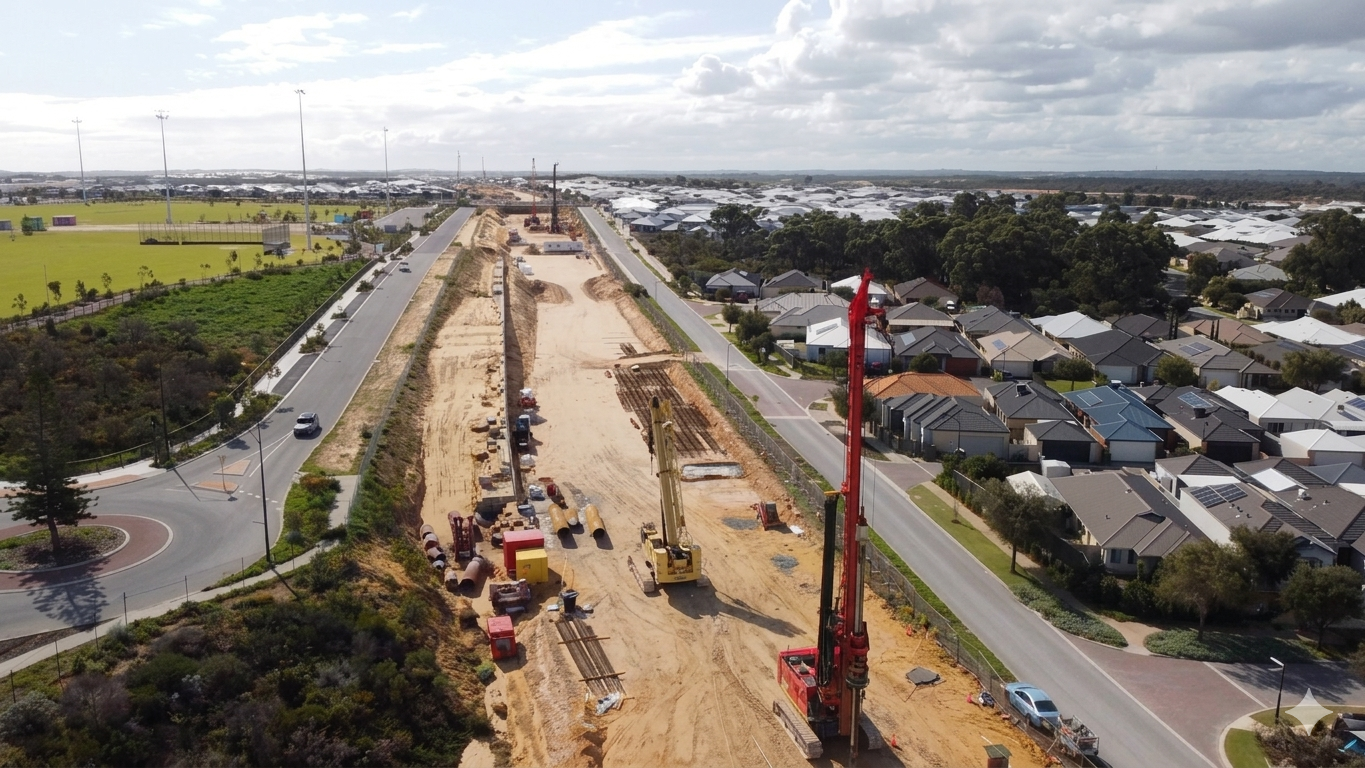
Infrastructure drives accessibility, jobs, and desirability—but only once it’s actually funded and underway.
Prioritise locations with:
- State or federal funding already approved
- Projects under construction (not just announced)
- Transport upgrades (rail, motorways, public transport)
- Health, education, and lifestyle infrastructure
Infrastructure improves commute times and unlocks new buyer pools—often before prices fully reflect the benefit.
Tip: Follow where governments are spending, not just what they’re talking about.
4. Housing Supply Constraints
Capital growth accelerates when demand rises faster than supply.
Strong growth locations often have:
- Limited land availability
- Natural boundaries (water, parks, topography)
- Low rates of new dwelling approvals
- High owner‑occupier density (less speculative stock)
Inner‑ring suburbs and established middle‑ring areas often outperform fringe locations because supply simply can’t expand quickly.
Red flag: Large greenfield estates with endless land releases.
5. Demographic Profile Trending Upwards
Follow the people—not just the property.
High‑growth areas usually show:
- Rising median household incomes
- Educated workforce growth
- Young professionals upgrading from renting to buying
- Increasing owner‑occupier ratios
This is known as gentrification in action—and it’s one of the most powerful drivers of sustained capital growth.
6. Lifestyle Appeal and Amenity Access
Lifestyle isn’t a “nice to have”—it’s a demand multiplier.
Buyers pay a premium for places that make life easier and more enjoyable.
Key amenities include:
- Cafés, restaurants, and retail strips
- Schools (especially high‑performing public schools)
- Parks, beaches, and walkability
- Cultural and recreational facilities
The rise of hybrid work has made amenity‑rich suburbs even more valuable, particularly outside Sydney and Melbourne CBDs.
7. Affordability Relative to Incomes
The best growth often occurs where prices are still affordable relative to local incomes, but improving.
Look for:
- Purchase prices below the city median
- Strong serviceability for local households
- Room for wage growth and buyer upgrading
- Rental yields that support holding costs
This is the “sweet spot” where demand can expand without hitting affordability ceilings too early.
8. Tight Rental Market
Investor demand follows tenant demand.
Strong rental fundamentals include:
- Low vacancy rates (typically under 2%)
- Rising rents over multiple years
- Diverse tenant pool (families, professionals)
- Limited new rental supply coming online
A tight rental market often signals future price growth, not the other way around.
9. Market Cycle Positioning
Timing matters.
Some locations boom early, others later. High‑growth investors look for areas that are:
- Early to mid‑cycle (not peak hype)
- Beginning to show price momentum
- Benefiting from a broader city‑wide upswing
- Still offering value compared to neighbouring suburbs
Often, the best opportunities sit just outside already‑booming suburbs.
10. Local Sentiment & Buyer Activity
Finally, look beyond the data.
Professional buyers watch:
- Auction clearance trends
- Days on market falling
- Buyer competition increasing
- Owner‑occupier demand rising
When locals start competing aggressively for homes, growth often follows.
Final Thoughts: It’s Never Just One Factor
No single metric creates a high‑growth location. The strongest performers tick multiple boxes simultaneously.
Think of it as a scorecard:
 Growing population Diverse jobs Infrastructure investment Supply constraints Demographic uplift Lifestyle appeal Rental pressure Early‑cycle positioning
The more boxes a location ticks, the stronger its long‑term growth potential.
