Construction delays are not a fringe risk in Australia’s current building environment. They are the norm. With build times for houses now running at 11.5 months on average compared to 8.6 months a decade ago, and apartment construction stretching to 33 months from a previous average of 21, investors buying off-the-plan or house and land packages need to understand exactly what a delayed completion costs them, and what practical protections they can put in place before they sign a contract.
The Real Cost of a Delayed Build
Most investors understand that delayed completion means a delayed income start. What they sometimes underestimate is the full financial compounding effect of that delay, particularly in the current interest rate environment.
Holding costs continue to accumulate. If you have purchased land and are paying a construction loan, interest accrues throughout the building. An interest rate of 6.5% on a $400,000 construction draw on a $700,000 project costs approximately $2,166 per month in interest charges. A six-month delay adds more than $13,000 in holding costs before a single dollar of rent is collected.
Rental income is lost, not deferred. Every week the property sits uncompleted is a week of rental income that is gone permanently. On a property that would rent for $600 per week, a 12-week delay costs $7,200 in foregone income.
Finance conditions may change. When an off-the-plan property takes longer to complete than expected, the finance approval you held at exchange may have lapsed. You may need to re-apply at the time of settlement, potentially at a different interest rate or under tightened lending criteria. If your borrowing capacity has reduced during the construction period, as can happen with changes in employment, interest rates, or lending policy, the settlement itself can be at risk.
Valuation gaps can emerge. An off-the-plan apartment contracted in a stronger market may be independently valued at settlement below the contracted price. In a rising market this is rarely an issue. In a flat or softening market, it is a genuine risk, and it is amplified by longer construction timelines, during which market conditions have more time to shift. Lenders will only finance against the lower of the contract price or the current valuation.
Tax implications. For investors relying on the 2026 Budget’s new-build carve-out to retain negative gearing, delays that push a project’s completion into a different financial year can affect when deductions become available. Discuss the expected settlement timeline carefully with your accountant.
Why Builders Run Late in 2026
Understanding why delays occur helps investors identify which projects carry the highest delay risk and ask the right questions before committing.
Fixed-price contract stress. As covered in the construction pipeline article in this series, residential builders in Australia typically operate under fixed-price contracts. When material and labour costs rise above what was priced, builders face a choice: absorb the loss, slow the project, or collapse. All three outcomes produce delays for buyers.
Subcontractor availability and insolvency. A head contractor may be financially sound, but if the plumbing or electrical subcontractor on their project goes under mid-build, the project stops until a replacement is engaged. In the current environment, where nearly a quarter of all corporate insolvencies in Australia are in the construction sector, subcontractor failure is a genuine mid-build risk on any project.
Council and certification delays. Local government inspection and certification delays can hold up construction at any stage, and in many of Australia’s fastest-growing councils, inspection queues have lengthened significantly. An inspector who cannot attend for three weeks at the frame stage can push the whole project back.
Weather and site conditions. Extended wet seasons, flooding, and unexpected site conditions all cause delays that are difficult to anticipate at contract stage but are entirely common.
Supply chain disruption. While global supply chains have largely normalised since the worst of the post-COVID period, lead times for certain materials, particularly specialist windows, HVAC systems, and certain electrical components, remain longer than pre-pandemic norms.
Protecting Your Timeline: Before You Sign
The most powerful protections available to investors happen at the contract stage, before construction begins. Once you have signed without appropriate protection, your options to manage delay risk are significantly reduced.
Understand the Sunset Clause
A sunset clause sets the outer deadline by which the developer must complete the project. If completion does not occur by that date, either party can rescind the contract.
This sounds like protection for the buyer, and in part it is. But sunset clauses have also been used by developers in bad faith: deliberately slowing construction to allow the sunset date to pass, then rescinding contracts and re-selling the same units at higher prices in a rising market. NSW and Victoria have introduced legislative reforms to address this specific abuse, but the clauses still exist and still need expert review.
Key questions to ask before signing:
- How long is the sunset period? Standard is 36 to 48 months for apartments; shorter for house and land.
- What constitutes practical completion for the purposes of the clause?
- Does the developer have a history of using sunset clauses to exit contracts?
- Has a specialist property solicitor reviewed the sunset clause and all delay-related provisions?
Negotiate Liquidated Damages for Delay
A liquidated damages clause specifies a daily or weekly amount the builder or developer must pay you for every day the project runs past the agreed completion date. Without this clause, a builder who runs late pays you nothing for the inconvenience, holding costs, or lost rental income. With it, you have both a financial remedy and a contractual incentive for the builder to prioritise your project.
Not all builders will agree to liquidated damages, and some will resist vigorously. But it is worth negotiating, particularly on house and land packages where you have more direct contractual relationship with the builder than in a multi-unit development.
Clarify Variation and Escalation Clauses
Read every clause that permits the builder to charge you more than the contracted price. Some contracts include rise and fall clauses that allow builders to pass on material cost increases above a specified threshold. These clauses can be reasonable in the current environment (they reduce the risk of builder insolvency by sharing cost risk) but they need to be capped and clearly defined.
An uncapped rise and fall clause is an open-ended cost exposure. Ensure any such clause has a maximum and that the basis for calculating increases is clearly defined.
Research the Builder Thoroughly
Before signing a house and land contract, apply the same scrutiny to your builder that you would apply to any business you were entering into a two-year financial relationship with.
- Verify the builder’s license with the relevant state building regulator (QBCC in Queensland, NSW Fair Trading in NSW, VBA in Victoria, DMIRS in Western Australia)
- Run an ASIC search on the company and its directors to check for prior wound-up entities or adverse history
- Confirm that home warranty insurance (also called domestic building insurance or home building compensation insurance, depending on your state) has been issued in your name before paying any deposit
- Speak to recent clients, not just the references the builder provides
- Visit an active construction site unannounced to observe how it is managed and how tradespeople interact
Home Warranty Insurance: What It Covers (And What It Doesn’t)
Home warranty insurance is mandatory for residential building contracts above a certain value in most Australian states. It provides cover if the builder becomes insolvent, dies, or disappears and the work is incomplete or defective. Coverage amounts vary by state: NSW covers up to $340,000, Victoria moved to $400,000 under the revised Home Warranty scheme from 1 July 2026, and Queensland’s scheme covers up to $200,000 per category of loss.
Critical to understand home warranty insurance is a last resort. It applies only after the builder is formally insolvent, has died, or has disappeared. It does not cover a builder who is still trading but is delivering defective work. It does not cover cost overruns or delay losses. And it requires you to navigate an insurance claim process that can take months while your project sits incomplete.
The lesson is that home warranty insurance is a safety net, not a primary protection. Due diligence before signing is real protection.
Protecting Your Timeline: During Construction
Even with a well-negotiated contract, ongoing vigilance during construction is essential.
Stage Inspections
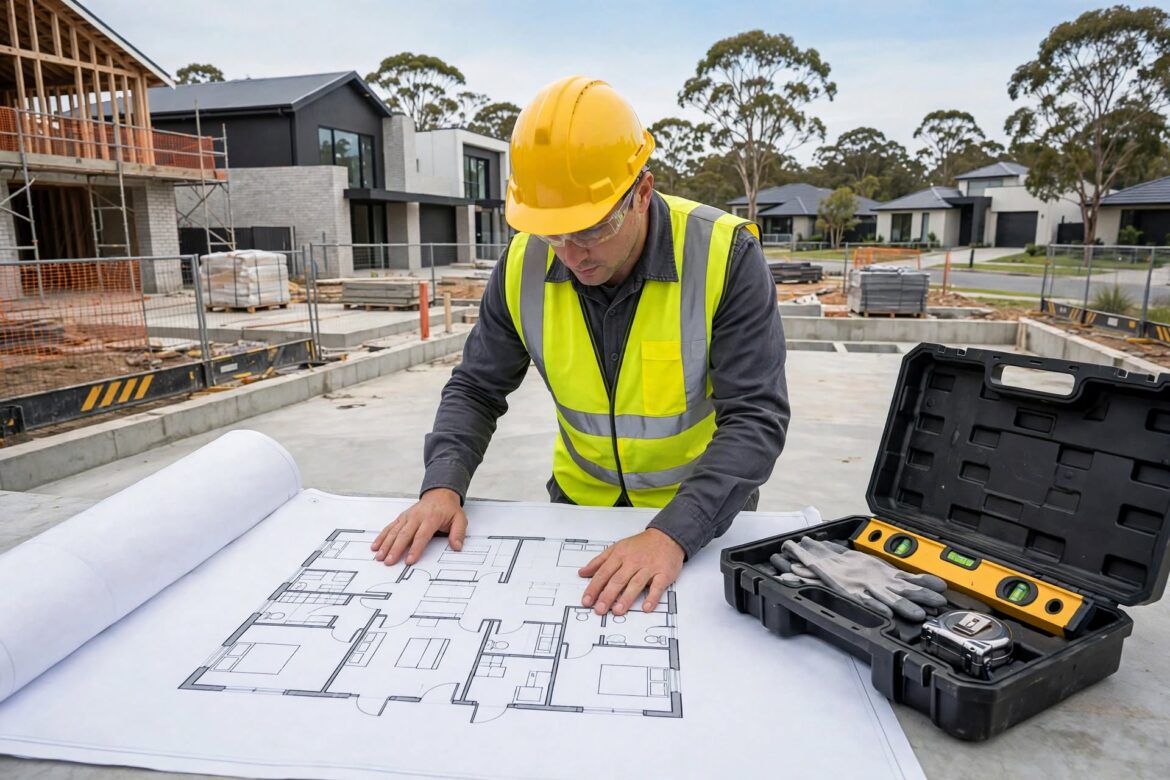
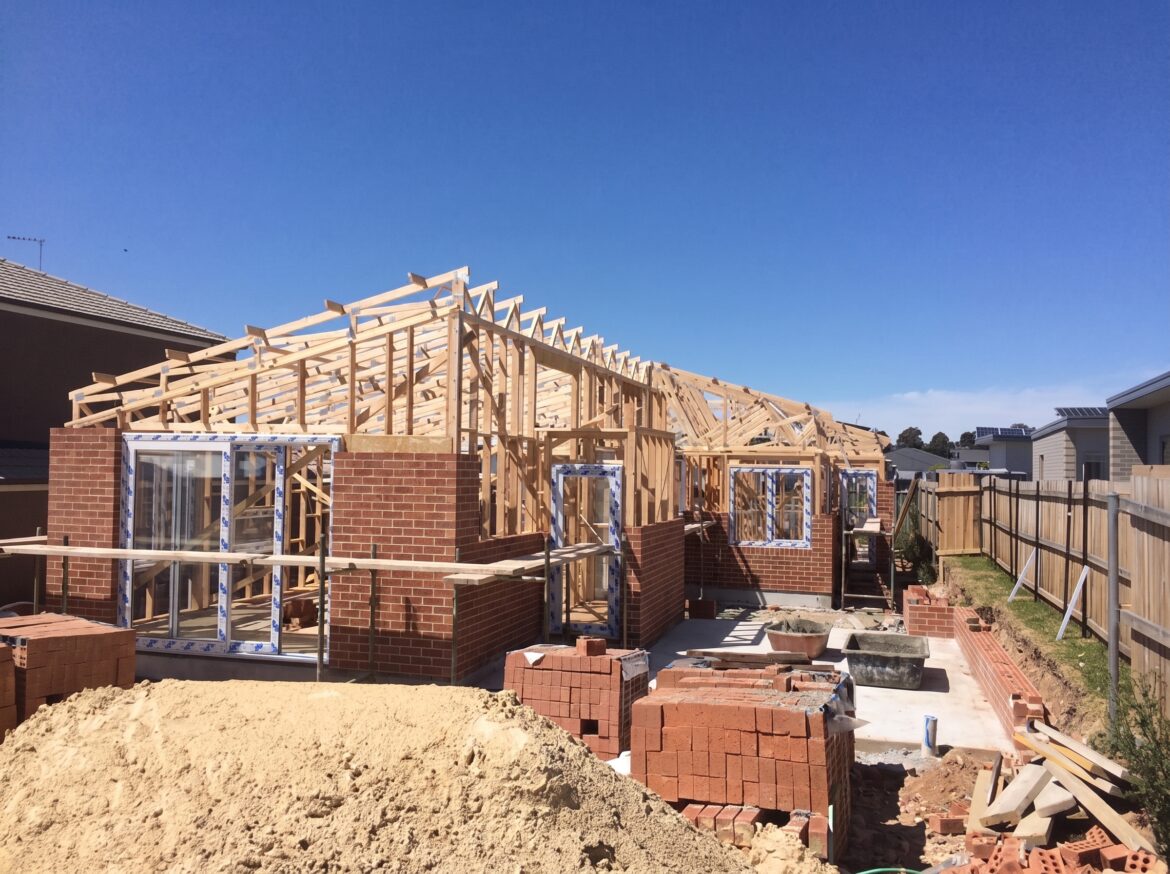
Commissioning an independent building inspector at each major construction milestone is one of the most effective protections available for a house and land investor. A qualified inspector visits the site at the slab, frame, lock-up, fixing, and practical completion stages, documents compliance against the approved plans and the National Construction Code and provides a written report before you authorise the next progress payment to the builder.
Stage inspections typically cost $300 to $650 per visit. The value they provide is substantially higher. Defects identified at the frame stage can be rectified easily before walls are lined. The same defects identified after plastering can require demolition and reconstruction at significant cost and delay.
Never pay a progress claim for a stage you have not independently verified. Your construction loan will typically require you to release funds based on progress, but the right to verify that progress is yours to exercise.
Maintain Communication with Your Builder
Regular communication with your project manager keeps you informed of schedule changes before they compound. Ask at each stage for an updated expected completion date and any known risks to that date. A builder who is tracking behind schedule early in a project may recover; a builder who is running six months late by lock-up and hasn’t flagged it is a concern.
Know Your Dispute Resolution Options
If you have a genuine dispute with your builder over delay, defective work, or contract performance, your options vary by state:
- Queensland: Queensland Building and Construction Commission (QBCC)
- New South Wales: NSW Fair Trading, then NSW Civil and Administrative Tribunal (NCAT)
- Victoria: Domestic Building Dispute Resolution Victoria (DBDRV), then Victorian Civil and Administrative Tribunal (VCAT)
- Western Australia: State Administrative Tribunal (SAT)
These bodies can mediate disputes and, in some cases, order rectification or compensation. Engaging them early, before a dispute escalates, is generally more effective than waiting.
For Off-the-Plan Apartment Buyers
Off-the-plan apartments carry a related but distinct set of delay risks compared to house and land packages. You are dealing with a developer rather than a builder directly, which adds a layer of complexity around developer financing, pre-sales targets, and the risk of the project not proceeding at all.
Key additional protections for off-plan buyers:
- Verify your deposit is held in a solicitor’s trust account and cannot be accessed by the developer until settlement
- Request evidence of the developer’s construction financing and presales status before exchange
- Have a specialist property solicitor review the contract, with particular attention to variation clauses, the specification schedule (which defines what you will receive at settlement), and any sunset clause terms
- Run a worst-case scenario: if your borrowing capacity dropped 15% by the time of settlement, and the property independently valued 10% below the contract price, what would your options be?
The Bottom Line
Construction delays in Australia in 2026 are not exceptional events. They are routine features of a building industry under sustained stress. For investors, the question is not whether delays are possible, but whether you have structured your purchase to withstand them.
Thorough due diligence on the builder or developer, a well-negotiated contract with appropriate delay protections, independent stage inspections throughout construction, and realistic financial modelling that accounts for a range of completion scenarios are the fundamentals of managing this risk. Investors who apply them will be far better positioned to protect their timeline and their returns.
If you would like guidance on evaluating a specific builder, developer, or construction contract, our team is here to help.
Disclaimer: This article is intended as general information only and does not constitute legal or financial advice. Construction terms, warranty insurance coverage, and dispute resolution processes vary by state and change over time. Always engage a specialist property solicitor to review any construction or off-the-plan contract before signing.